The Failure of the White Ceiling
Architecture is the manipulation of volume. It is the careful consideration of how three dimensions interact to create a feeling. Yet, in the modern home, we often stop at two. We obsess over the floor. We labor over the walls. Then, we look up and surrender. We paint it white. We call it "clean." We call it "bright."
It is neither. It is a failure of imagination.
The white ceiling is a default. It is the absence of a decision. In the luxury homes of Dallas and the sprawling estates of East Texas, this oversight is a wasted opportunity to define the true soul of a room. We treat the ceiling as a lid. A necessary utility to keep the rain out and the insulation in. But the ceiling is the fifth wall. It is the final boundary of the interior experience. When we ignore it, we leave the room unfinished. We leave the story half-told.
At Haus of Sabo, we view the ceiling as an architectural instrument. It is the surface that holds the light. It is the plane that dictates the acoustic and visual weight of a space. To leave it blank is to ignore the very volume we claim to design.
The Myth of the "Bright" Room
The argument for the white ceiling is almost always centered on light. The belief is that white reflects. It makes the room feel taller. It makes the space feel airy. This is a half-truth that has led to decades of sterile, uninspired interiors.
A white ceiling in a room with saturated walls creates a visual disconnect. It severs the verticality of the space. The eye travels up the rich, textured wall and hits a flat, matte barrier. The flow stops. The volume is crushed. True height is not achieved by a lack of color, but by the strategic application of it.
When we design in places like Fort Worth or Rockwall, we look at the light. The North Texas sun is brutal. It is high-contrast. A flat white ceiling under this light often turns a muddy grey in the shadows. It loses its "brightness" and becomes a dull, heavy weight. By treating the ceiling with intent: through deep hues or high-gloss finishes: we actually engage with the light. We don't just reflect it. We shape it.

The Architecture of Shadow and Gloss
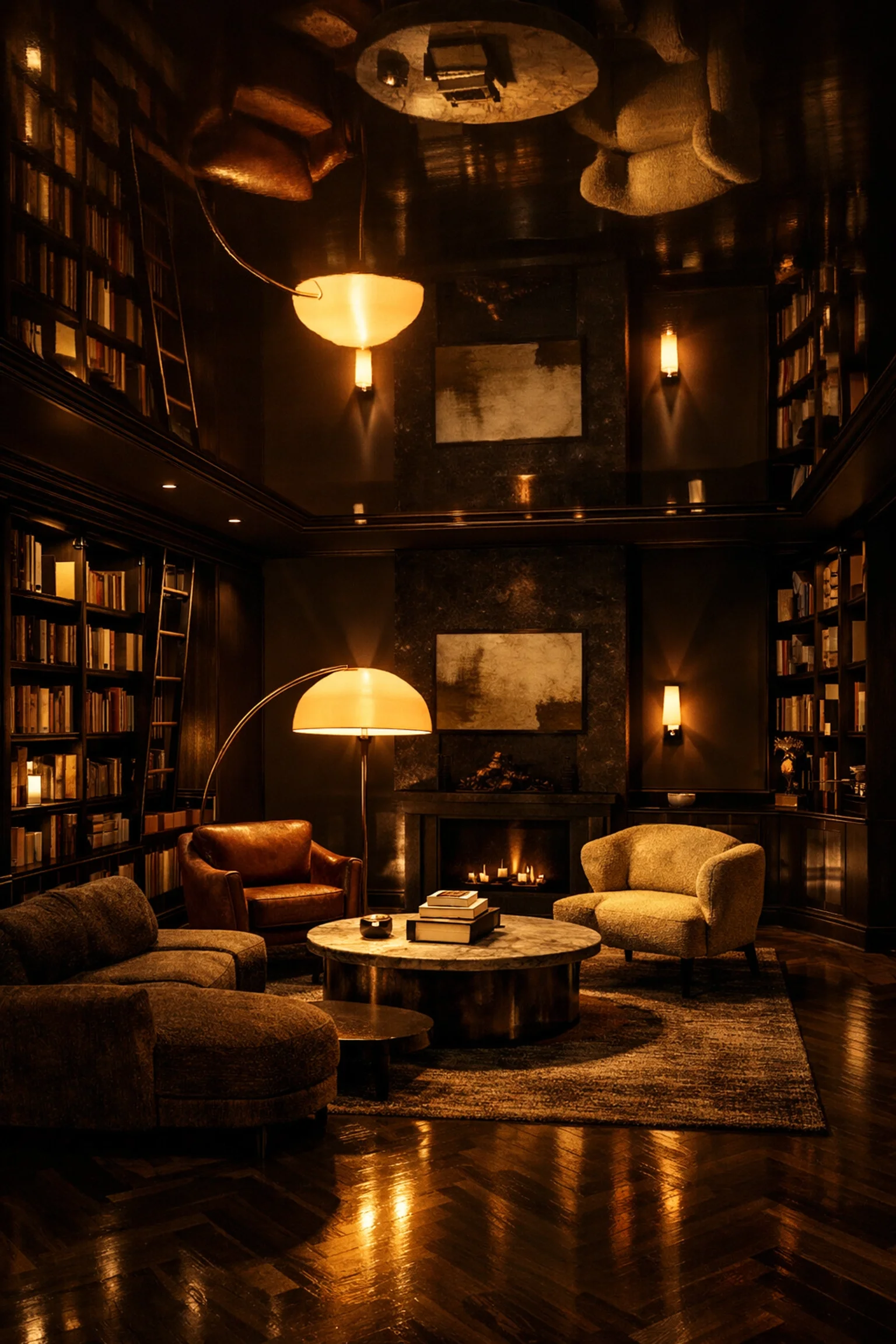
Consider the high-gloss ceiling. This is not a trend. It is a return to a more sophisticated understanding of surfaces. A lacquered ceiling in a deep navy or a soft charcoal does something a white ceiling can never do. It reflects the life of the room. It mirrors the warm pools of light from a floor lamp. It captures the movement of people.
It adds depth. The ceiling no longer feels like a hard stop. It feels like an opening. It feels like water.
In our work on the architecture of shadow, we discuss how darkness defines space. This applies to the fifth wall with even more urgency. A dark ceiling does not "close in" a room if the proportions are correct. Instead, it creates a sense of intimacy. It brings the scale of a grand Dallas living room down to a human level. It provides a sense of shelter. It is the difference between standing in an empty field and sitting under a canopy.
The Monochromatic Dive
Color drenching is perhaps the most honest way to handle the fifth wall. It is the act of painting the walls, the trim, and the ceiling in the exact same hue. No contrast. No white crown molding to "pop" against the paint. Just immersion.
This approach removes the visual clutter of boundaries. It allows the furniture and the inhabitants to become the focal point. In a study or a library in Tyler or Longview, a monochromatic dive in a forest green or a deep burgundy creates a sanctuary. It is an architectural embrace.
When the ceiling matches the walls, the corners disappear. The room feels infinite. We are no longer looking at a box. We are experiencing a volume. This is the paradox of surface that we often explore. By simplifying the color palette, we complicate the emotional resonance of the space.
Stripes and Geometric Intent
If color drenching is about immersion, then the use of patterns on the ceiling is about direction. Bold stripes. Architectural grids. These are moves for the confident homeowner.
In a hallway in McKinney or a dining room in Heath, a striped ceiling can act as a compass. It draws the eye through the space. It emphasizes length. It creates a rhythm that the walls alone cannot achieve. This isn't about "decorating." This is about using the fifth wall to reinforce the floor plan. It is about alignment.
We often see ceilings treated as a separate entity from the rest of the design. This is a mistake. The pattern on the ceiling must speak to the layered details found elsewhere in the home. It is a conversation between surfaces.
The East Texas Context: Warmth and Wood
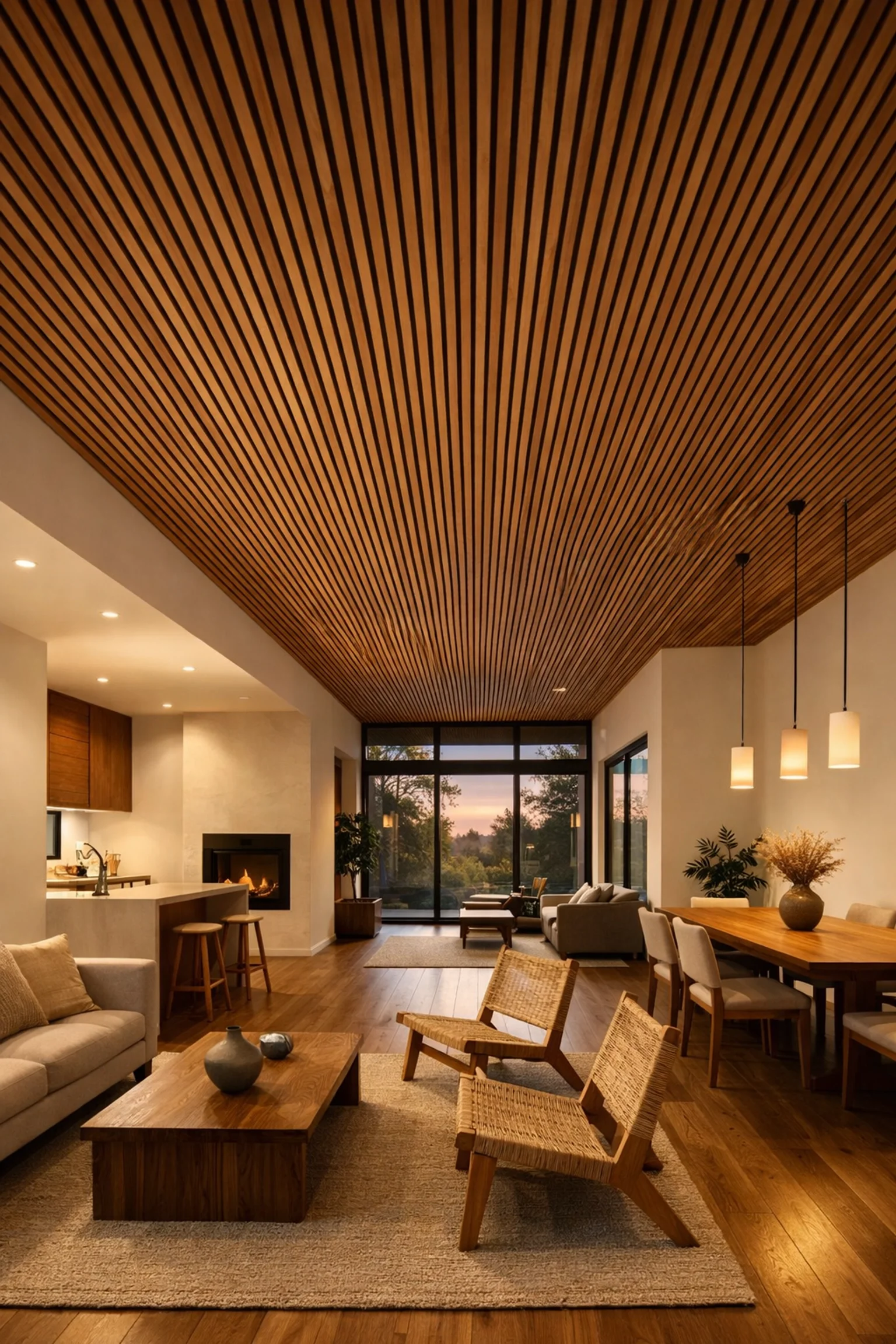
In our projects across Royse City and Sulphur Springs, we often look to honest materials to solve the ceiling problem. Wood is the ultimate architectural texture. A ceiling clad in narrow-gap oak or reclaimed timber provides a warmth that paint cannot mimic.
It is about acoustic softened. It is about the smell of the room. It is about the way the grain catches the evening sun. A wood ceiling turns the fifth wall into a piece of furniture. It is structural yet tactile. It grounds the home in a way that white drywall never will. This is where the Japandi integration of minimalism and natural warmth becomes most apparent. Simple lines. High-quality materials. Zero fluff.
Reframing the Boundary
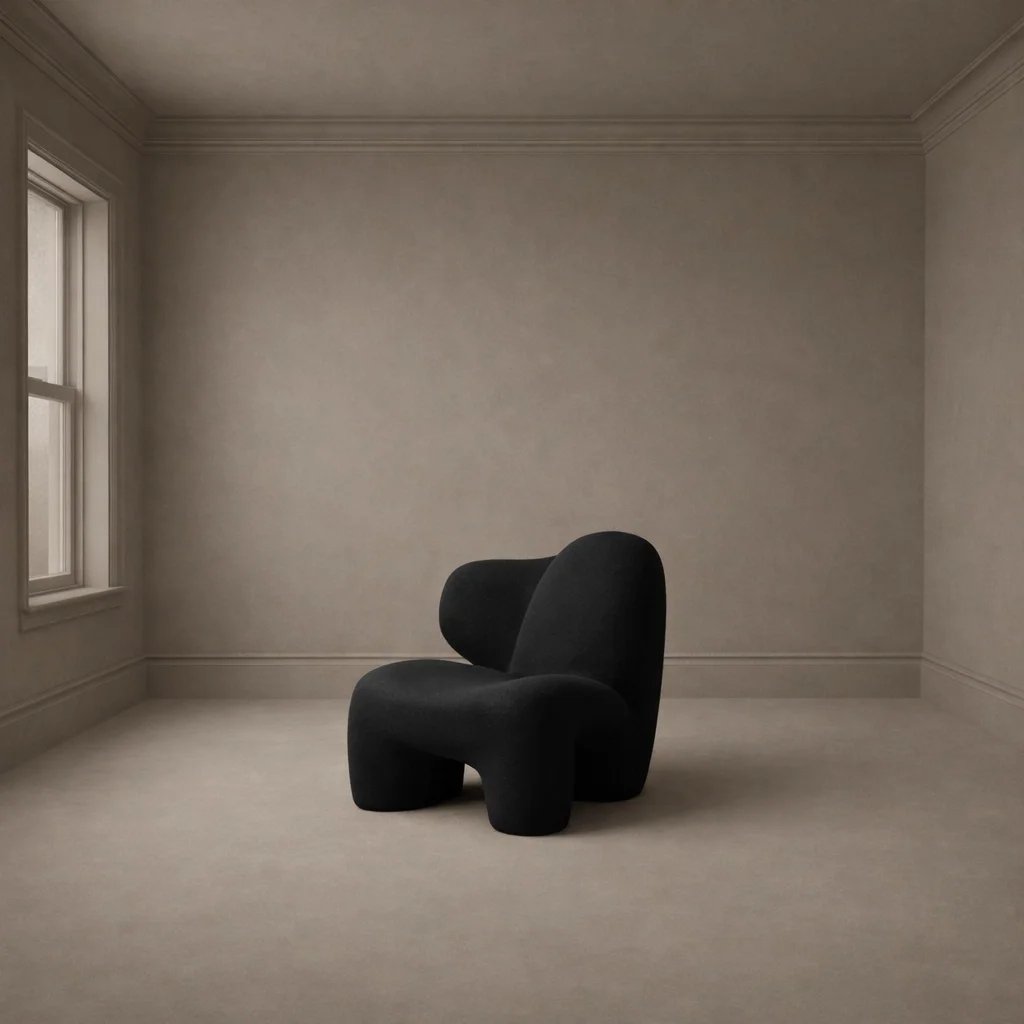
The move away from the white ceiling is a move toward intentionality. It is a rejection of the "builder-grade" mindset that has dominated the DFW metroplex for too long. We are seeing a shift. Homeowners in Garland and Mesquite are no longer satisfied with the status quo. They want homes that feel curated. They want homes that feel like them.
The ceiling is the most underutilized real estate in any building. It is a massive, unobstructed canvas. To leave it white is to admit that you ran out of ideas. It is to say that the design ends six feet above the floor.
But the design should never end. It should wrap. It should fold. It should enclose.
When you look up in your home, what do you see? If it is a flat, characterless white, you are missing half the experience of your own house. You are living in a box with no lid.
At Haus of Sabo, we challenge the necessity of the white ceiling. We invite the shadow. We welcome the gloss. We embrace the saturated hue. Because a room is not a collection of walls. It is a volume of space. And that volume is defined by what happens above us.
Stop looking at your ceiling as a utility. Start looking at it as an opportunity. The fifth wall is waiting. It is time to finish the room.
If you are ready to move beyond the default and explore the architectural depth of your home, our services are designed for those who value intent over trend. From the heart of Dallas to the quiet corners of East Texas, we are redefining the modern interior. One ceiling at a time.